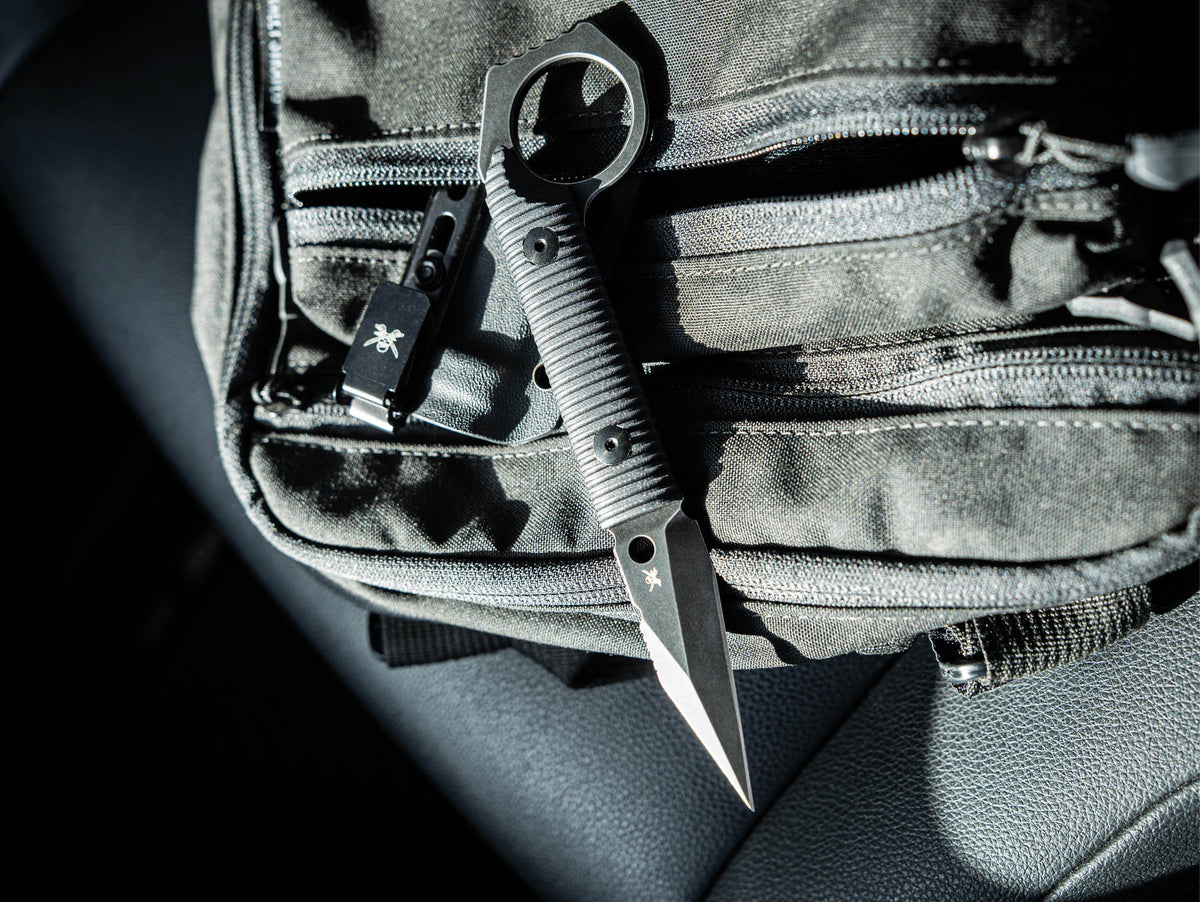
A knife is only as good as the job it is built to do.
That is where a lot of people get it wrong. They buy based on looks, hype, or whatever feels the most aggressive in hand. But the best knife is not the one that looks the toughest. It is the one that works when you need it, carries the way you want it to, and earns its place every day.
At Skallywag Tactical, we build knives for people who stay ready. That means tactical readiness, everyday carry, outdoor utility, and hard-use performance. If you are trying to choose the right knife, start with the job first. Everything else comes after that.

Start With the Work
Before you choose a blade, ask one simple question.
What is this knife really going to do?
Is it going in your pocket every day for utility cuts, boxes, cord, and quick tasks around work or home?
Is it meant for outdoor use, camp chores, and general field work?
Is it built for a more serious tactical role where speed, strength, and access matter most?
Those answers will tell you a lot.
Choosing the right knife is not about ego. It is about purpose. A working blade should match the way you live, the way you carry, and the kind of problems you expect it to solve.
Fixed Blade vs Folder
This is the first real fork in the road.
If you are comparing a fixed blade vs folder, neither is automatically better. They are just built for different jobs.
Choose a Fixed Blade When You Want Strength and Simplicity
A fixed blade knife is built for direct access, strength, and confidence. There are no moving parts, no pivot, and no lock to think about. What you see is what you get. That makes a fixed blade a strong choice when durability matters and speed matters.
A fixed blade is often the right call for:
- Tactical readiness
- Outdoor work
- Hard-use cutting tasks
- Faster deployment
- Users who want maximum structural strength
If your knife needs to work in rough conditions, or if you want a tool that is simple and dependable under pressure, a fixed blade makes a lot of sense.
Choose a Folder for Everyday Carry and Convenience
A folding knife is the smarter play when carry comfort, low profile, and daily utility matter most. A good folder disappears into the pocket, stays out of the way, and is there when the job shows up.
A folder is often the right call for:
- Everyday carry
- Work tasks and utility cuts
- Lightweight pocket carry
- Low profile use
- People who want easy daily access without belt or sheath carry
For many users, a folder is the best EDC knife because it gives you cutting capability without taking up too much space or drawing too much attention.

Which One Is Better for Everyday Carry?
For most people, a folder wins on convenience. It is easy to pocket, easy to carry, and easy to use through the day.
That said, some people prefer a compact fixed blade for everyday carry because it offers faster access and more confidence in the structure of the tool. If that sounds like you, a fixed blade can still be a great EDC knife, especially if you want something purpose-built and ready for harder use.
The real answer comes down to how you carry and what you expect from the knife.
Blade Shape Matters
Once you decide between a fixed blade and a folder, the next step is blade shape.
This matters more than people think.
Different blade shapes do different jobs better. Some are better for control. Some are better for piercing. Some are better for general utility. If you want the right knife for the right job, blade shape cannot be an afterthought.
Spear Point Blade
A spear point blade is a strong all-around option. It offers a balanced profile, a solid tip, and the kind of versatility that works well across a wide range of cutting tasks.
A spear point is a good fit for:
- Everyday carry
- General utility
- Balanced cutting performance
- Users who want one knife that can do a lot well
If you want versatility without getting too specialized, a spear point is a solid place to start.
Wharncliffe Blade
A Wharncliffe blade is built for control.
With its straighter edge and fine tip, it shines in utility work, precise cuts, scoring, slicing, and tasks where control matters more than brute force. This is a blade shape that works hard in the real world.
A Wharncliffe is a good fit for:
- Utility cuts
- Precision work
- Daily carry
- Controlled slicing
- Tradesmen and hard-use users who want accuracy
If your knife sees more real work than fantasy work, a Wharncliffe deserves a serious look.
Dagger Blade
A dagger blade is a more specialized tool. It is built with a different mission in mind and should be chosen accordingly.
This style is more focused on tactical intent, piercing performance, and fast, decisive access. It is not your typical utility blade, and it is not meant to be. It fills a specific lane for users who need that kind of purpose-driven performance.
A dagger profile is best for:
- Tactical applications
- Specialized use
- Users who want a purpose-built defensive blade
This is where choosing the right knife really comes down to honesty. If your daily tasks are boxes, rope, and worksite cuts, a dagger is probably not your answer. If your needs are more specialized, that is a different story.
Drop Point Blade
A drop point blade is one of the most trusted blade shapes for a reason. It is practical, capable, and easy to live with.
Drop points are known for their versatility and control, making them a great fit for users who want a reliable all-around knife for daily tasks, field use, and general carry.
A drop point is a good fit for:
- Everyday carry
- Field use
- Outdoor utility
- General purpose cutting
If you want a blade shape that feels familiar, dependable, and useful across a wide range of tasks, a drop point is hard to beat.
Choose the Edge That Matches the Work
The edge matters too.
Most users will get the most out of a clean, practical edge designed for real cutting tasks. The key is not choosing what sounds the most intense. The key is choosing what fits the way you actually use a knife.
If your day is filled with utility work, choose an edge and blade shape that favors control and slicing. If you want a more tactical tool, choose a profile that supports that mission. If you want an all-around carry knife, stay with something versatile and easy to manage.
Good gear is about fit. Not fantasy.

How to Choose the Best Knife for the Job
If you want to keep it simple, here is the breakdown:
Choose a fixed blade if you want:
- Maximum strength
- Fast access
- Hard-use reliability
- Tactical or outdoor capability
Choose a folder if you want:
- Easy everyday carry
- Lightweight pocket carry
- Daily utility
- A lower profile option
Choose a spear point if you want:
- Versatility
- Balanced performance
- Everyday utility
Choose a Wharncliffe if you want:
- Precision
- Control
- Utility-focused cutting
Choose a dagger if you want:
- Specialized tactical purpose
- Piercing-focused performance
Choose a drop point if you want:
- A dependable all-around blade
- Field and everyday use
The Captain's Final Word
The right knife is the one that fits your real life.
Not the loudest one. Not the flashiest one. Not the one built for a job you are never going to do.
At Skallywag Tactical, we believe good gear should be built with purpose, carried with confidence, and used with intent. Whether you choose a fixed blade or a folder, a spear point or a Wharncliffe, the goal is the same. Pick the tool that matches the work. Carry it hard. Let it earn its place.
That is the Skallywag way.